
Our services
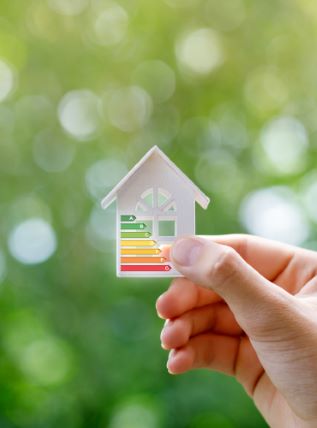
BASIX, only applicable in NSW, is based on the data you provide regarding your building design; the BASIX tool assesses the anticipated water consumption and greenhouse gas emissions levels of your proposed development.
The expected thermal performance of the proposed building is also assessed as part of BASIX. For the water and energy targets, the development is assessed on how it is likely to perform against existing dwellings of the same type.
BASIX uses comprehensive data sets supplied from utility organizations, state agencies and the Australian Bureau of Statistics to analyse and compare your proposed development against the NSW ‘average’.
This data includes resource demand, occupation levels, and market penetration rates of technology, climate and other factors. An ongoing comprehensive analysis of sustainable technology ensures that BASIX is contemporary and reflects best practice in sustainable housing.
Algorithms within the BASIX tool calculate how your single dwelling, alteration and addition or multi-unit is likely to perform against a benchmark development of the same type.
The Nationwide House Energy Rating Scheme (NatHERS) is a star rating system (out of ten) that rates the energy efficiency of a home, based on its design.
By providing a ‘measuring tape’ to estimate a home’s potential heating and cooling energy use, NatHERS helps to make homes on NSW, VIC, QLD and all other states more comfortable for their inhabitants and also helps residents to save on energy bills through smarter design choices.
Often good design can reduce the amount of energy needed to keep a home comfortable with no or little additional construction cost.
More about NatHers Services:
- The NatHERS Universal Certificate provides a comprehensive and uniform approach to displaying important home energy assessment information and modelling outcomes.
- The Universal Certificate includes information on the dwelling’s key design features, building materials and parameters used to generate its star rating.
- A Universal Certificate showing the NatHERS logo demonstrates that the assessment was completed by a NatHERS Accredited Assessor, allowing certifiers to easily verify that the person rating your home is skilled in completing NatHERS Assessment. Providing relevant information in a comprehensive and uniform way allows builders, certifiers and regulatory authorities, to quickly understand the energy rating of a home and can be used to more easily confirm that the building has been built to the design on which the energy rating assessment is based.
- For all states except NSW, the new NatHERS system is now in effect, which includes WOH (Whole Of Home) and measures the energy use of the entire home, including appliances, solar energy and batteries.
Section J of the National Construction Code (NCC) Volume 1, outlines the energy efficiency requirements of non-residential buildings in whole Australia. The main objective is to reduce the amount of energy a building requires for its normal operation. All new buildings in Australia need to demonstrate their compliance, so a NCC Section J report must be compiled to accompany the design documents at the Construction Certificate stage.
The Section J Assessment can be performed by two methods:
One is to check the design elements of the proposed development against the Deemed to Satisfy (DTS) provisions of the NCC The other method is a verification method (JV3) which uses thermal simulation of the proposed development and its comparison with a reference building that meets all the DTS requirements of the NCC Section J.
This assessment must be performed by an experienced and qualified energy efficiency consultant to minimize the risk of any non-compliance issues or council rejection.
The performance requirements of the DTS provisions include meeting the Total R-Values of roofs, walls and floors, the glazing allowances and the air movement requirements. These detailed provisions also include the testing and installation of insulation, thermal breaks, compensation for downlights, floor edge insulation and detailed provisions for building sealing.
These requirements fall into six main sections in the NCC, regarding Section J Report Services:
- Part J4 – Building Fabric
- Part J5 – Building Sealing
- Part J6 – Air-conditioning and ventilation
- Part J7 – Artificial Lighting and Power
- Part J8 – Heated Water Supply and Swimming Pool and Spa Pool Plant
- Part J8 – Energy Monitoring